How to cool down during these upcoming warm months with a chill, refreshing Prosecco DOC and elderflower based cocktail. You’ll be the most requested bartender at family gathering and barbecues.
This refreshing aperitif, made of three fantastically simple ingredients, elderflower cordial (or liqueur as the all time favourite St.Germain) Prosecco DOC and a dash of seltzer water, is all you need to spend your warm spring days, contemplating life while sat under a willow tree – because who doesn’t spend summer like that – maybe wondering why you hadn’t heard of a Hugo sooner than right then and there. The sweet, earthy tones of elderflower pair fantastically with Prosecco DOC’s sharp and clean flavour.
Why have we kept it a secret for so long, you might ask?
Well we haven’t, as before 2005 this drink was not even a thing; It took Roland Gruber’s beautiful mind and palate to come up with the Hugo cocktail. The discovery took place in Italy’s Tyrol region, in the beautiful dolomites where Mr. Gruber has created a modern classic that is so deeply anchored in our hearts and cocktail lists, that it resembles the ascension to fame of the Penicillin, created at New York’s Milk and Honey by star bartender Sam Ross, in the same year, 2005.
What a truly great year for cocktails.
He has gifted us with something that we did not know we were missing, and there is no doubt on why it became such a huge success.
The other reason for its success?
Prosecco DOC, clearly.
Italy’s sparkling wine that is becoming increasingly loved outside of our country, also known as the forefather – or mother – of the aperitivo scene, and the elderflower’s fresh, botanical and fruity tones give it an incredibly jammy mouthfeel.

Lets talk a bit of history here:
Place yourself sunbathing in the Dolomites valley, it’s mid-spring, the days are getting longer you can almost feel summer creeping around the corner, it is at this exact point in time in which foragers around the world unanimously shout to their families “ go fetch the elderflowers, before they disappear”.
The tradition, the history, the foragers, tell you should only utilise and harvest the flowers mid morning, as far away as possible from car’s fumes, when the small closed flowers begin to sunbathe – just like you would – and they are starting to channel all the goods the sun has to offer them , but they haven’t yet been exposed to too much heat, that is why you wouldn’t collect them in the late afternoon… Elderflowers are as beautiful and tasty as fickle, as they are unfortunately only in bloom for a single month throughout the year, from late May to end of June.
We would like to help you turn this fantasy easily into reality by giving you a simple Elderflower cordial recipe, you’ll need only water, lemon and sugar and the superbe white flowers to create a tasty beverage. (For our favourite recipe just keep scrolling!)
The elderflower cordial is one of those incredible nectars that will leave you begging for more, as even if it is high in sugar, it doesn’t bother the consumer as one might think. How you ask? Well, as per everything that is sugary and has to be preserved a fair amount of time, we cut it with some fresh zesty, acidic lemon, that will cut thought the sweetness enough to make it unforgettable. A true sign of summer’s beginning.
Another brilliant aspect of this drink is its low – alcohol content, and the dryness and freshness of Prosecco that make it an unmitigated success for an Aperitivo. Now , decades have gone by, and Hugo remains in our hearts and minds : and that is how you create a modern, new classic starting from tradition.
Just like the incredibly famous Aperol or Campari Spritz, Hugo cocktail has all the Italian favourites, it is refreshing, sweet, zesty, and a beautiful crisp bouquet thanks to the final mint garnish.
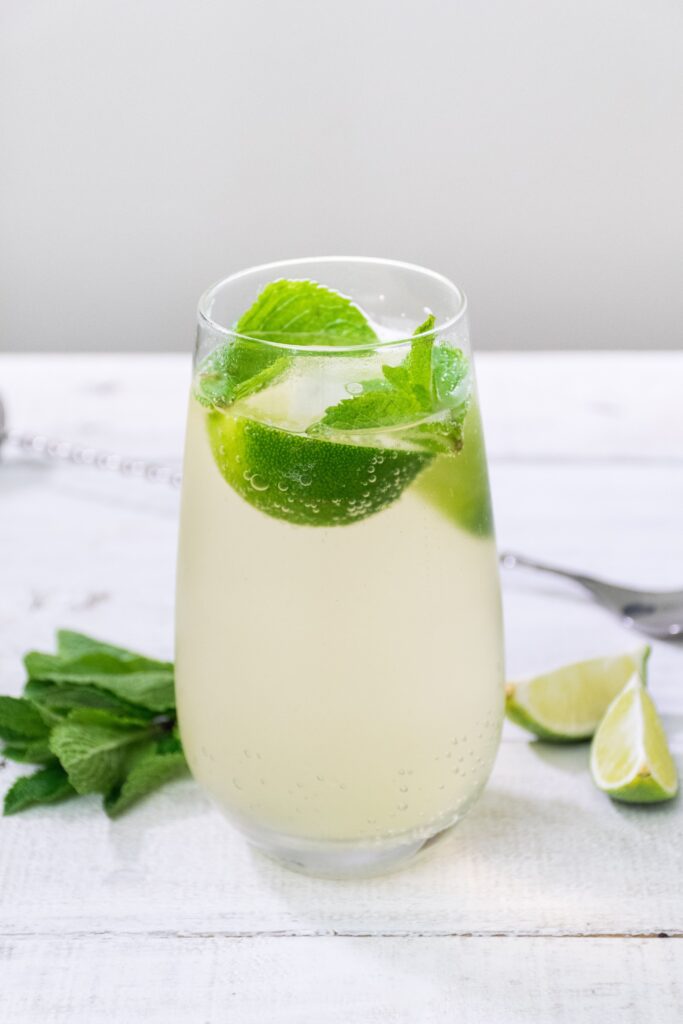
Talking about tradition, what differs between the traditional Spritz and a Hugo Spritz?
It is said that the name Spritz comes from the German “spritzen”: during the nineteenth century when Veneto was under the Hapsburg rule, the German speakers in the area that were there as diplomats, merchants, visitors etc.. were not used to the potency of our wines, and they used to “cut” it down with a dash of water. “Spritz me up this wine will you barkeep”.
As you might imagine, sparkling wine in the area was already all the rage, so the first spritzes were sparkling glera and water, and as this concoction became increasingly popular around Veneto, bartenders and hosts in general began playing with this idea of spritzes and making it their own, blending them to their taste. It became the most served drink in the beginning of the twentieth century, catering to both the people in the streets of Italy as a pre-dinner drink, and the lavish Austrian and German society events.
Aperol spritz was already Italy’s favourite spritz in the fifties. The incredibly famous aperitif was created in 1919 in Padua by the Barbieri brothers, as a bitter aperitif made of rhubarb, gentian and china, its colour reminisces of Campari’s bright orange, but with a lower abv.
The Hugo was created as variation to an Aperol Spritz, Mr. Gruber must have been inspired by the beautiful intoxicating scent of the elderflower trees growing on the side of the alps. The bitterness of the Aperol is replaced by a dash of elderflower cordial its taste incremented by lime and mint, making a lighter, crisper drink.
How to: Hugo cocktail for beginners.
It is devastating how easy it is to make this drink, and how well it fits in any sort of “gathering”.
It could be easily made at home, for a party, for your 5pm lockdown Aperitivo, during a barbecue, a picnic and so on.
The ingredients you will need are as follow, and the glass you’ll need is a large wine glass:
– Elderflower cordial, to taste
– Prosecco DOC, your favourite brand will do.
– dash of sparkling water or seltzer
– a squeezed lime wedge
– mint is the classic garnish for it, but we say go wild, try something new, something you like.
– Ice
How to mix it, serve it and drink it
There are just a few simple steps that almost any Italian (certainly everyone above 18 from Veneto and Friuli Venezia Giulia) know by heart.
Firstly fill you wine glass with a lot of ice, don’t be shy, the more ice the less watery your drink will get, then add the elderflower cordial and the lime juice, plus the lime wedge it came from and mix it a bit.
Add the sparkling water to it, mix a bit again, and top up with your favourite Prosecco DOC.
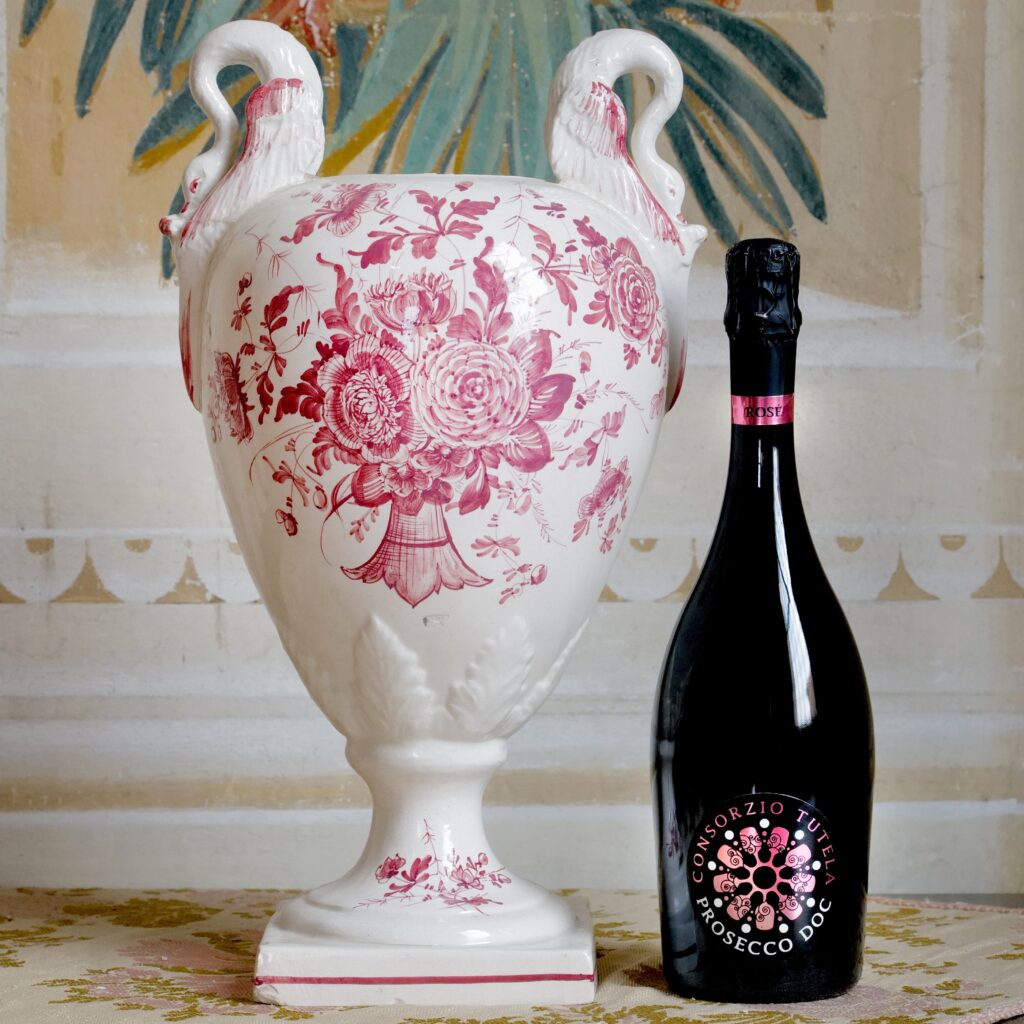
You can certainly use Prosecco DOC Rosé to recreate the orangish hue of Aperol Spritz.
Garnish how you please.
For the cordial recipe, follow river cottage’s step by step guide to an amazing Elderflower cordial.
Enjoy responsibly.

Take life lightly, as lightness is not superficiality, but gliding over things from above.
Italo Calvino
L I G H T N E S S T H A T I N S P I R E S
Our story begins with our two young protagonists. She, Asian-Italian, is a young career woman on a business trip to Italy. He, the waiter, loves “the beautiful game” and art.
We are in the province of Treviso at La Ghiacciaia Restaurant, one of the most beautiful restaurants for interior design in the world. Alida is so engrossed in her frenetic activity that she doesn’t notice the offer of a
glass of Prosecco DOC from our waiter Joe.
Between one phone call and another, Alida decides to indulge in a break.
She does not know the world behind a glass of Prosecco until he puts her nose to the glass… In that instant, the bouquet of roses and acacia flowers intoxicates her, transporting her to a world in which nature is art and art is as natural as life.
It is a journey to the places of the Italian Genio.
This spirit, or Genius loci, is Antonio Canova, neoclassical sculptor, and Trevisano “DOC”.
We see this spirit inside the Canova Gypsotheca, among the neoclassical plaster statues of this great genius, among which Adonis and Venus stand out.
It is a journey posible only in the company of Joe and Prosecco DOC and Prosecco DOC rosé .
In a rhythmic and prolonged sequence, in addition to Canova’s Gypsotheca, we visit many places: Trieste with its Piazza Unità d’Italia, “Molo Audace” and Miramare Castle, Venice and its Canal Grande and the eighteenth-century Goldoni Theater, Prato della Valle and Sant’Antonio in Padua, the Natural Park of the Isonzo River Mouth near Gorizia, the basilica of Aquileia, the airiness of the paintings by Giambattista Tiepolo in Vicenza, the Palladian Villa Emo, the source of the Livenza in Gorgazzo, the Belluno Dolomites, the Temple of Canova in Possagno.
In this voyage we also visit a typical semi-bellussera vineyard and a unique circular vineyard.
It is a journey of love.
The etheral nature of neoclassical art is harmony, lightness, grace.
The sail we see in the blue sea blown by the breeze is directed towards the Far East.
Like the Venetian Marco Polo, drawn to explore new lands.
Our woman, hard at first, has now rediscovered lightness, the one that elevates us above gravity and weight of existence.
Bright bubbles rise forming worlds, the world of prosecco is straw yellow and antique pink but its iridescent shades are elusive.
It is a world in motion.
The sail, free, continues its voyage.
Reality returns after every dream.
But this time aware that a glass of Prosecco is enough to make us dream again.
LIGHTNESS THAT INSPIRES – a film by Carlo Guttadauro
starring Giovanni Luzi and Alida Gazzotti
Click here to watch the short movie “Lightness That Inspire”


50 TOP ITALY, international cultural project whose aim is to share a map of the Italian restaurants all over the world, has started a Made in Italy enhancement project in Japan in collaboration with the Consorzio di Tutela della DOC Prosecco.
“L’Italia in Giappone” aims to present some of the protagonists of Italian restaurants in the Japanese territory, pairing their signature dishes with a glass of the most exported and consumed Italian sparkling wine, Prosecco DOC.
A format of 4 videos, with 4 chefs and 4 Prosecco DOC labels.
Pasquale Makishima, Pizzeria Braceria Cesari (Nagoya) – Le Contesse Prosecco DOC Rosé Brut Millesimato 2020
Peppe Errichiello, Napoli sta’ ca” (Tokyo) – Torresella Prosecco DOC Rosé Brut Millesimato 2020
Francesco Taglialatela (Tokyo) – La Marca Prosecco DOC Extra Dry
Chef Takahashi, Mansalva (Tokyo) – Villa Sandi Prosecco DOC Rosé Brut Millesimato 2020 “Il Fresco”

Italians, a population of saints, poets and navigators. But amidst the seas of Prosecco DOC bubbles, it is easy for even the most experienced readers of Italian Genius on wine-nautical charts to lose their bearings and be misled by the seductive songs of the sirens of libations, clouding their judgement, mixing up their knowledge without following any clear logic. But even just starting to choose a bottle of Prosecco DOC from the shelves of our favourite wine shop or from those of the best supermarket in the area, following our instinct, reading the label or relying on the recommendations of an expert, means becoming aware that you are taking the first decisive physical step in a precise tasting ritual, made up of lots of little moments, crucial and indispensable to the pleasure of the final (or first, depending on your point of view) sip. And here the most virtuous and influential of Dante Alighieri’s quotations must be adopted: You were not made to live as brutes, but to follow virtue and knowledge. Even in the realm of things to know about Prosecco DOC, which might look simple but is actually fraught with subtle and unique peculiarities.
What exactly is Prosecco DOC?
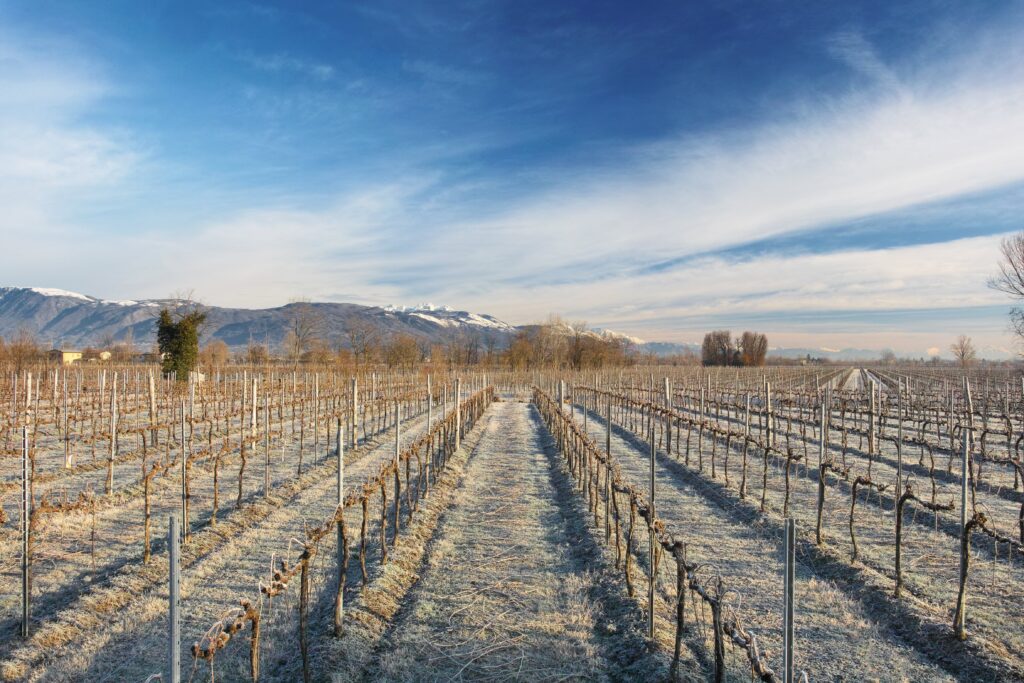
Prosecco DOC is a white wine with a Denominazione di Origine Controllata (Controlled Designation of Origin) that can only be recognised if it is made in the north-eastern part of Italy, between the Veneto and Friuli Venezia Giulia regions, in a total of nine provinces: four in FVG -Gorizia, Trieste, Udine and Pordenone- and five in Veneto -Belluno, Padua, Treviso, Venice, Vicenza-, which embrace the gentle curve overlooking the Adriatic Sea. Prosecco DOC is made from Glera grapes, a white grape variety with long bunches and softly golden berries, native to the Prosecco DOC areas, accounting for at least 85% of the total grapes selected. The special tying and topping carried out on the Glera vines allows the fullest concentration of the aromas, so that the berries are intensely fragrant and can release the most sensual and mysterious scents during fermentation. The remaining 15% can be made up of various types of grape, such as Verdiso, Bianchetta Trevigiana, Perera, Glera lunga, the much-loved and extremely versatile Chardonnay, Pinot Blanc, Pinot Grigio and, more recently, a blend with Pinot Noir vinified off skins has become very popular. However, most of the work is naturally done by the autochthonous (or native) Glera, the finest expression of the terroir. There are also two special DOCs that can only refer to white wines made from grapes grown, harvested, vinified and bottled in the provinces of Treviso and Trieste, and these are Prosecco DOC Treviso and Prosecco DOC Trieste respectively. True connoisseurs of Prosecco DOC know that it is worth tasting them to capture the wonderful affinities that unite two cities and two territories that are only geographically distant.
How many types of Prosecco DOC are there and what are the differences?
In its sparkling, apparent simplicity as a democratic wine, loved by all and dynamically versatile (for cooking, celebratory toasts and enhancing cocktails), Prosecco DOC actually hides little subtleties that highlight the differences. And they define the three different types, all of which are highly esteemed and appreciated to varying degrees: Spumante, Frizzante, Tranquillo. The first, Prosecco DOC Spumante, is the most famous and widely used without ever being ostentatious, perfect for every moment of the day and your life. It is recognised by its very fine, light and persistent perlage. Depending on the sugar content (from 0 to a maximum of 50 g/litre), it can be Brut Nature, Extra Brut, Brut, Extra Dry, Dry or Demi-Sec, and it is precisely because of this wide range of sugar contents that it pairs so well with a wide variety of dishes, whether it is with olives, taralli or fried baby octopus, a full dinner or a quick lunch. Prosecco DOC Frizzante has lots of bubbles and just as much personality, with its straw yellow colour and dry or semi-dry flavour, more delicate but at the same time very exuberant. Prosecco DOC Tranquillo has no bubbles but all the authenticity of a white wine. It is less common on the market but definitely worth trying in this delicate variant. Imported since the 1800s and perfected over the centuries, it is also worth rediscovering Prosecco DOC made using the bottle fermentation technique, which creates volcanic bottles with a captivating palate.
How do you choose the best Prosecco DOC?
The creation of the production regulations made it possible to fully protect the DOC, which must comply rigorously with certain characteristics, also with regard to sales. The labels bear the government seal with the letters DOC in blue ink, printed with anti-counterfeiting systems, which seals the bottle to prevent falsification: an opened bottle of Prosecco DOC is “inactivated”, and cannot be filled, resealed and passed off as authentic. New technologies assign QR codes to the bottles which, when scanned, communicate the authenticity of the wine chosen on your smartphone. In compliance with legislation, the talking label must bear the logo, the wording Prosecco DOC and the certification of origin explicitly stating Italia – Product of Italy.
How do you serve Prosecco DOC?
Have you ever tried drinking a warm sparkling wine, or even simply one that is at room temperature? You really don’t want to. There are less painful ways of atoning for your sins. And Prosecco DOC, the celebrated progenitor of Italian-style perlage, follows the golden rule of chilling which makes it more enjoyable to drink. This is how to serve Prosecco DOC: chilled, straight from the fridge, unlike pasta or any other food… brrr. So grab a thermometer: 6-8 degrees maximum, the colder the better, because it will tend to warm up in any environment anyway, and a well-chilled ice buckets to hold the bottle, which must be plunged into ice at least to the start of the neck.
How do you store Prosecco DOC?
Unlike those who like to meditate while sipping full-bodied, structured and well-aged reds, Prosecco DOC lovers are not people who dwell on things for long. Translated into practical terms: Prosecco DOC is not a wine to be stored. It is extemporary, cheerful, immediate, in a certain sense delicately ephemeral: an invitation to seize the moment. This is why it should preferably be consumed within the year following harvest, while it is at its aromatic and carbonic best. Ready to pop the cork with the perfect energy for every little moment of joy in your day-to-day life.

Apericena, a delicious mystery. Especially for non-Italian speakers, this neologism might sound puzzling, though it has earned a mention in the prestigious Treccani Encyclopedia, as it quickly became the surrealist protagonist of our time. This newly-coined event literally disrupted the rigid time scheme of conventional meals like a seductive dissident of good daily habits. In fact, it can be regarded as an informal evening meal involving aperitifs and tapas-style food in the form of a buffet that does not take place at a fixed time. Yet, it can be praised and rediscovered also at home, especially during times in which a careless spring aperitif, extended beyond sunset – the sole time frame indication you can think of for an apericena – seems very distant from us. A light aperitif buffet makes your life easier as it requires nothing but the desire – and the will – to shake off a tough day as soon as possible. It allows you to taste different foods, unleashes your creativity in the kitchen, explores diversity day after day. No more buffets overcrowded with hundreds of options but rather targeted and mouth-watering small portions, tasty and often nutritionally balanced, which at the same time enhance your drink of choice. At the beach or in a meadow on the Dolomites, in the empty cities in summer or in the spring twilight that call for one drink after another, breaking free from schedules is the best response to the desire of not feeling constrained, tied to rhythms imposed by others, free to create our own time. Like its cousin, the evergreen midday aperitif nostalgically evoking past times along with the polished bowls lined up on the counter, the apericena gives its best with the magical combination of food + wine, borrowed from its closest relative (and later extended to the brunch too, the only breakfast where you can drink alcohol without being given the evil eye – God bless the Bloody Mary). The usual glass of Prosecco DOC that refreshes the throat and comes with olives, peanuts and a few canapés – just to settle your growling stomach so you don’t starve until lunchtime – is still the linchpin of every end-of-day break.
The perfect match of cocktails, wine and food typical of the aperitif buffet is often interpreted with flexibility and creativity by chefs, mixologists and even pizza makers from all over the world, who came up with incredibly delicious creations.
Tasty dishes go hand in hand with a good glass of Prosecco DOC, whose qualities are highly appreciated across all regions. At SanBrite, a stone’s throw from Cortina, its soft and fresh bubbles enhance the taste of one of the most famous dishes of the Michelin-starred restaurant (Mountain Pine spaghetti, served in a flamboyant bowl covered with plant buds). Farther south, descending to the Amalfi Coast, one of the highlights of the Faro di Capo d’Orso restaurant (near Salerno) is Leeks cooked under the ashes, a purely vegan dish rich in contrasting flavours that will tease your taste buds; Prosecco DOC is, once again, the perfect pair for a smooth tasting experience. Italy’s most famous sparkling wine also enhances the crunchy and soft components of the Tagliolini cooked in tomato water with whitefish tartare and ground burnt onion, according to the haute cuisine standards of La Casa degli Spiriti in Verona. We are talking about gourmet restaurants, a sector that has quickly adapted to changing times and new needs.
Every dish has a love story with Prosecco DOC, from Southern Italy, the land of sumptuous creations that have the taste of the sea blended with vegetables, emphasised by the right bead, to the peculiarities of the North, where the combination of pizza + sparkling wine has become a must of social apericena events; not to forget foreign markets where brilliant intuitions and creative cultural crossovers are booming. The apericena has become an opportunity to loosen the rigid schemes of a centuries-old tradition.
Is there an exact time to start an apericena? Theoretically, no. It’s a profoundly inclusive event that contains the moment of dinner while removing all the non-essential features to get to the core: satisfying your appetite with tempting dishes and quenching your thirst with the best drink. At the Ceresio 7 restaurant in Milan, drinks are meticulously designed around the personality of the guests sitting at the bar or on the terrace and consist of low-alcohol cocktails based on Prosecco DOC mixed with juices of fruit macerated in apple vinegar and sugar. At the Quanto Basta restaurant, in the heart of the historic centre of Lecce, behind the Duomo, the traditional Spritz was reinvented and became Fragoletta (in honour of the Italian composer Rossini), with strawberries, vincotto vinegar, apple vinegar and Prosecco DOC; it was also transformed in a tribute to bubbles, mixing Amaro di Angostura, gin, chamomile syrup and shaken pineapple extract, all filled up with Prosecco DOC. Who would not like to hop from one tray to another following a series of well-designed, delicious, satisfying single portions that are a feast for the eyes and palate? A style loved by millennials, perhaps, but after all, the apericena knows no age as it breaks down social and time barriers. The same goes for the alici in tortiera (anchovies cooked in the baking tin) of the Quisisana restaurant in Capri, where you can sit in the terrace overlooking the sea stacks as you breathe in, embrace and eat the whole Mediterranean Sea while the umami taste of the bluefish cooked with breadcrumbs, a peasant food par excellence, is enhanced in the pairing with friggitelli, caressing the palate.
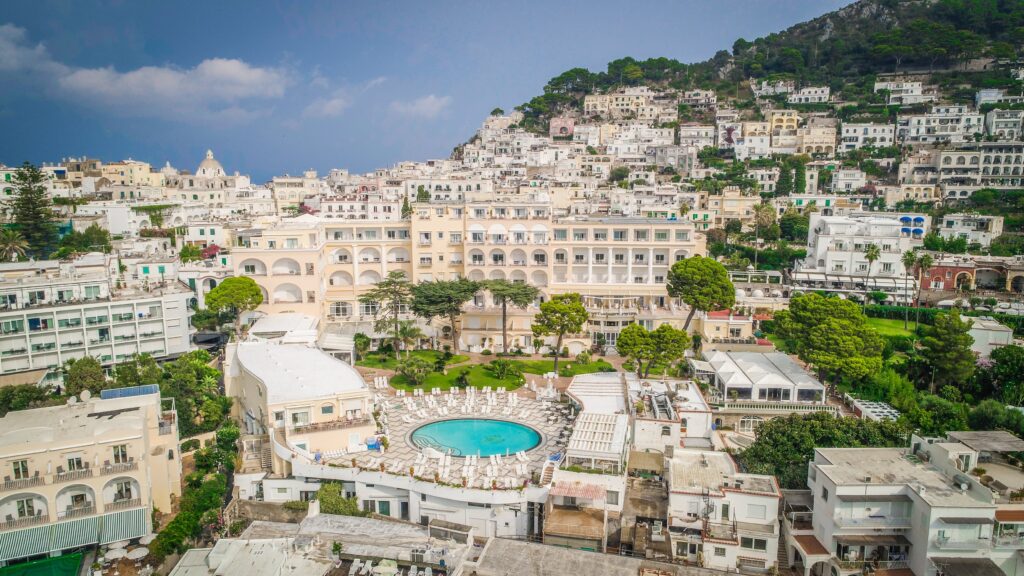
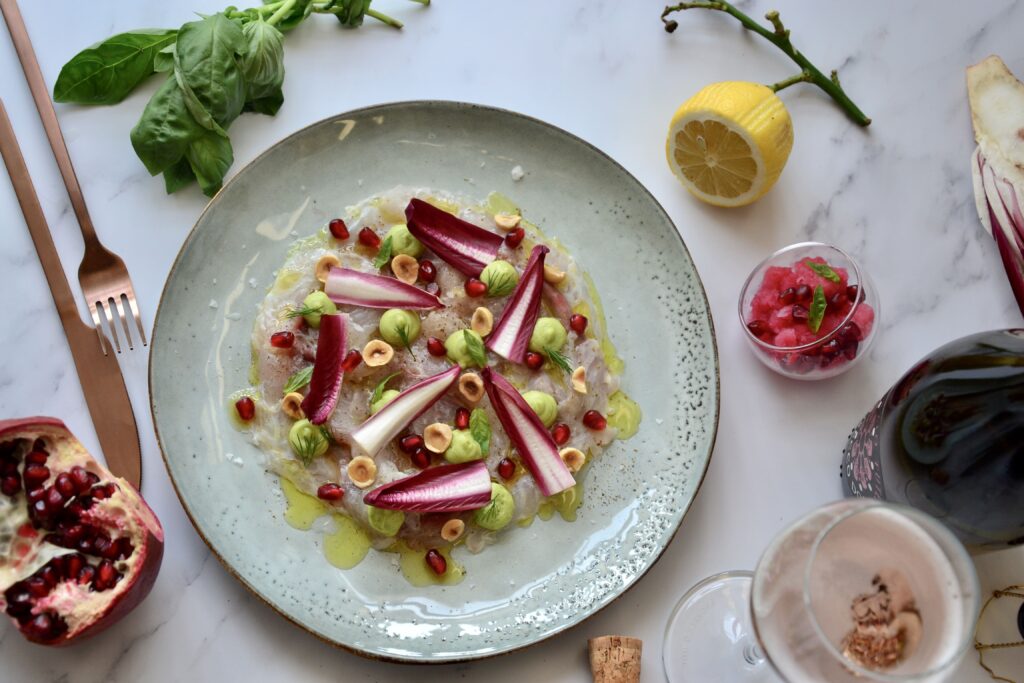
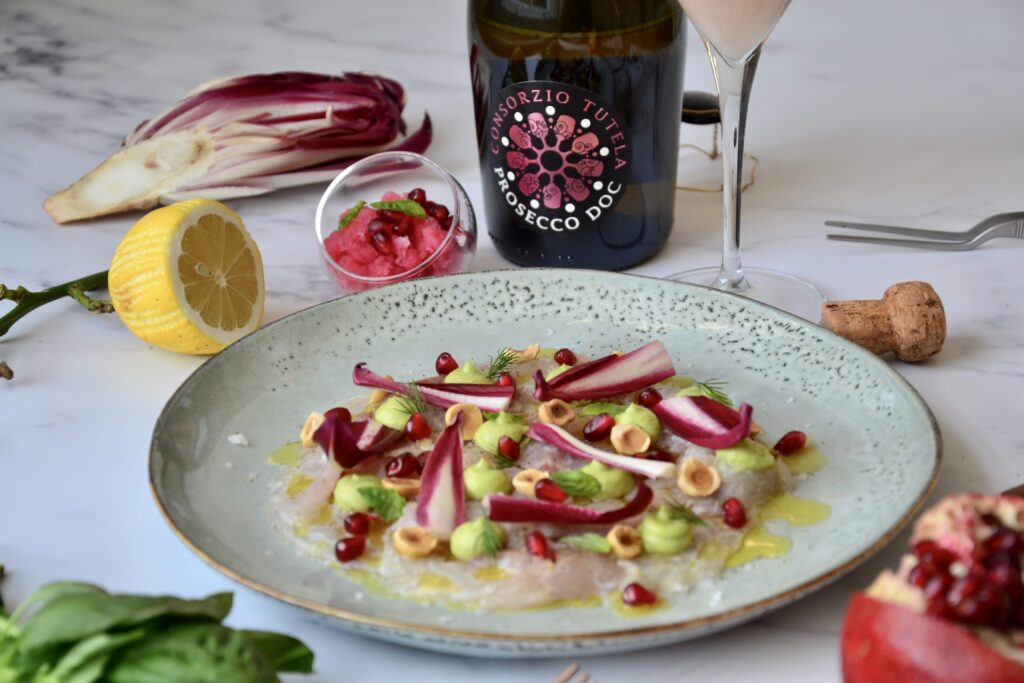
The apericena conciliates everyone’s needs, those who are hungry and those who are not, those who love to chase new tastes bite after bite and those who would spend their lives with their feet under a table. The neologism that linguists refer to as a portmanteau – a blend of words, in this case, aperitivo (aperitif) and cena (dinner) – is closely related to another very Italian term that still evokes the concept of time: espresso. Not in the sense of the coffee served at the bar, but as in ‘express’, rapid creation and execution of a dish, almost on the spot. Even though this could apparently clash with the extended hours of the apericena, it is actually a key component of the happening. Danilo Cortellini, UK Brand Ambassador of Prosecco DOC, gives his interpretation of this form of aperitif buffet through his eat & drink recipes that not only enrich the apericena but also make it perfect for all seasons. The Sea bream carpaccio with pomegranate sorbet and Prosecco DOC Rosé is a fresh dish, of the highest quality, which requires little preparation and is guaranteed to satisfy the palate of all ‘sparkling wine and fish’ lovers. The chef recommends serving the sorbet in iced glasses to maintain the right texture.
Yield: 4
Prep: 25 mins
Cook: 5 mins
Category: Starter
Ingredients:
2 sea bream 500-600 g each (frozen at -20 °C for at least 24 hours)
2 teaspoons pomegranate seeds
1 ripe avocado
20 g peeled and roasted hazelnuts
2 tablespoons extra-virgin olive oil
1 lemon
1 radicchio
1 cup basil or other herbs for garnishing
Salt and pepper to taste
For the sorbet
200 ml Prosecco DOC Rosé
100 ml freshly squeezed pomegranate juice
25 g sugar
Directions
Start with the sorbet: dissolve the sugar with the pomegranate, let it cool and add the Prosecco Rosé. Place it in the freezer (you will have to scrape it to get the right consistency) or in the ice cream maker.
For the fish: using a very sharp knife, cut some fillets from the central part making sure that the fish is clean (rinse it with running water if necessary). Dry it thoroughly and remove the bones with tweezers. Cut it into very thin slices keeping the skin down.
Mash the avocado with a little lemon, salt and pepper, into a puree and put it in a pastry bag.
Arrange the fish slices on a large plate and season with lemon, extra-virgin olive oil, salt and pepper. Add some avocado cream, coarsely chop the hazelnuts and the pomegranate seeds. Add the leaves of radicchio and basil or the herb of your choice. Serve the sorbet on the side, still frozen.
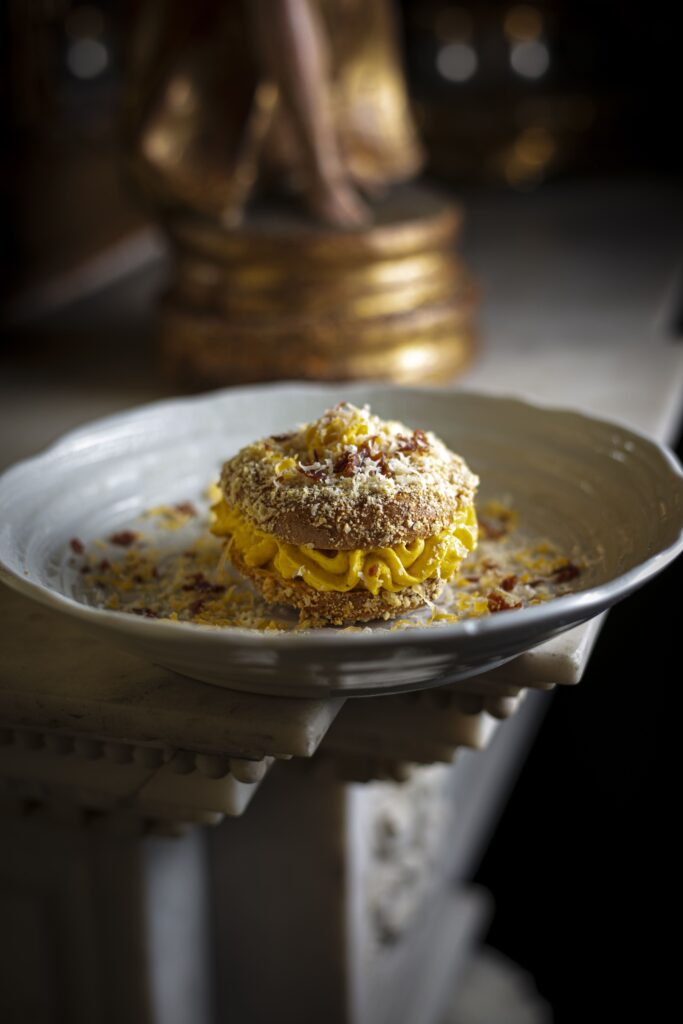
Danilo Cortellini also proposes delicious cheese Zeppole with Prosecco DOC Zabaione in two variants: with crispy bacon or in the vegetarian version, without meat.
Yield: 8
Prep: 50 mins
Cook: 20 mins
Categories: starter / main course
Ingredients:
For the Zeppole:
3 eggs
75 ml water
75 ml milk
60 g butter
90 g 00 flour
20 g grated Grana Padano
A pinch of salt
For the Zabaione:
4 egg yolks
100 ml Prosecco DOC Brut
40 g grated Grana Padano
1 g saffron
120 g whipped cream
Salt and pepper to taste
To garnish
Grana Padano crust, swollen and ground
2 egg whites
Grated Grana Padano Riserva
8 slices of crispy bacon
Directions:
If you’ve never made the cheese crust swell, you will be amazed at how simple it is! Place the crust on a dish and put it in the microwave for about 30 seconds – 1 minute and watch it inflate. Remove the gummy or singed parts with a sharp knife. Let it cool and
grind it with a blender.
To prepare the Zabaione with Prosecco DOC, thoroughly mix the egg yolks with the Prosecco, grated Grana Padano and saffron in a large steel bowl. Place the bowl in a bain-marie and cook gently while stirring to create a soft cream similar to Zabaione. Never let the water reach a boil to prevent the eggs from splitting.
Once the mixture is thick and creamy, remove from heat and allow to cool. Add salt and pepper to your taste and mix gently. The result should be a soft and delicate texture similar to Chantilly cream.
To make the Choux pastry, melt the butter in a mixture of milk and water, then gradually add the sifted flour, whisking gently. Add a pinch of salt and cook for a couple of minutes while mixing with a wooden spatula to make sure the flour is evenly cooked. Remove from heat and, while the mixture is still hot, add the eggs one at a time, stirring gently.
Allow the pastry to cool and place it in a pastry bag. Spread the parchment paper on a baking sheet and work the Zeppole into dough rings, about 10 cm in diameter. You can make a second layer of dough to create higher, softer rings.
Bake them in the oven at 170 °C for about 18 minutes or until they turn golden brown and have doubled in size. Allow to cool down. For a crunchier crust, brush the Zeppole with beaten egg whites and sprinkle them with the ground cheese crust. Bake again at 180 °C for 2 minutes and allow to cool.
Cut the Zeppole horizontally and fill them with abundant Prosecco DOC Zabaione. Sprinkle them with grated Grana Padano and chop the crispy bacon on top. Eat while still hot (who could resist,
anyway?!).
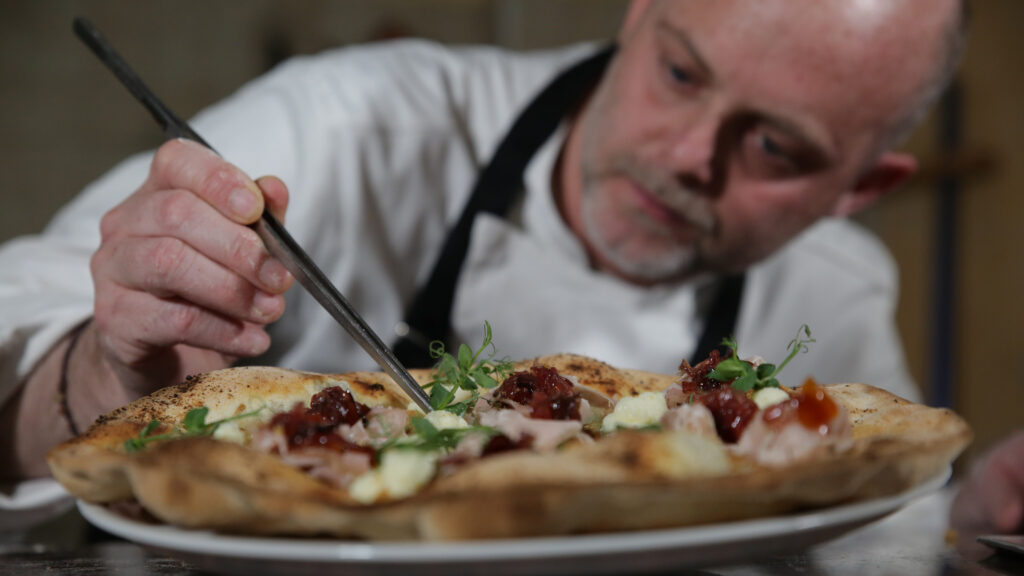
Pizza is also a great alternative for an apericena menu. A mainstay of Italian gastronomy, it can be an excellent solution to satisfy the desire to try different tastes, giving a twist to the aperitif buffet. After confirming beyond doubt the absolute deliciousness of a sparkling Prosecco DOC paired with pizza, in all its variations of toppings and doughs, all that is left is an embarrassment (and curiosity) of riches. A traditional Margherita or Marinara from the most authentic Neapolitan tradition of Gino Sorbillo, well risen, with a considerable cornicione (outer edge), to double up and polish off voraciously, to pair with a classic Prosecco DOC Brut, served very cold, to help you keep the palate clean and lighten up the chewing.

A brilliant wine & food pairing lesson can be learnt in the lands of Prosecco DOC, specifically, in the province of Belluno, where Denis Lovatel opened his Pizzeria Da Ezio. Being a mountain man, he likes his pizzas thinner and crunchy – a crunch, as he calls it – with toppings that greatly enhance, specifically, white pizzas. This is where the Prosecco DOC expresses all its freshness and aromatic vivacity, making the cheese creams feel lighter in the mouth as well as the savoury, tasty and most important ingredients, so they can be eaten at any time. Prosecco DOC is versatile and fresh, it can be light or supportive as needed. The flexibility in time, structure and gastronomy of the apericena is balanced by Prosecco DOC’s quiet elegance of unshakable certainty. Par tout.
Success! And the cork pops as a crowd of glasses gathers under the froth to catch every single drop of those precious bubbles. Nocturnal scenes of theatres, open, throbbing with emotions, with actors, technicians and stagehands all pooling their skills to work a magic spell. The bond between theatre and wine is deep, geological, ancestral. The successful partnership between Teatro Stabile del Veneto “Carlo Goldoni”, the theatrical production association that brings together three important structures within the region -Treviso’s Teatro Mario del Monaco, Padua’s Teatro Verdi and Venice’s Teatro Goldoni-, and Consorzio del Prosecco DOC, is precisely this: an update that continues to weave the ancient, wonderful habits of open dialogue between theatre and wine into the present. A shared project that starts from languages, from vocabularies that borrow themes and meanings from one another, from the continuous evocation of a propitiatory rite of happiness. Temporary and fleeting, just like all kinds of happiness. The tradition of performing on stage dates back to Greece and its ancient myths, when people used to worship the god of wine and theatre Dionysus (Bacchus to the Romans) with specially created performances. Their purpose was not only to stage the legends and beliefs of a deeply fervid culture, but also to emphasise the power of the god, the ability to unleash real human instincts with the help of the wine that he glorified, and, above all, to indirectly reveal the vagaries of nature, so changeable as to be beyond any real control, and only tameable – and even then without any guarantees – in certain variables. Comedies, dramas and tragedies were written in that distant past, and who knows how much they were influenced by the different reactions to the gulps of fermented wine that the actors drank to give themselves courage. What better representative of the twin category than Mirandolina, La Locandiera (The Mistress of the Inn), with her quick wit and generous readiness to top up every glass, celebrated by the irreverent genius of Carlo Goldoni as a sublime expression of female Machiavellian intelligence?
-
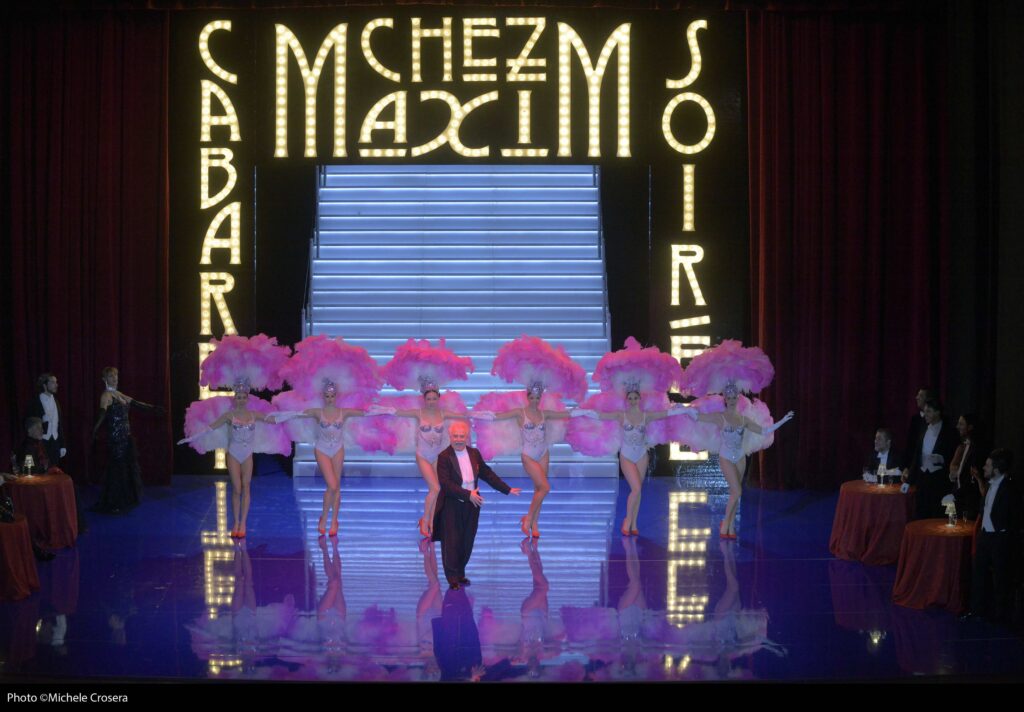
- Photo ©Michele Crosera
Creating theatre by combining different fields of action and drawing inspiration from the most diverse sources. And it has survived to this day, taking on new forms and interpretations without ever betraying its soul. Self-congratulatory, as well, because it is right to shine a spotlight on what deserves recognition. Every (self) representation is an acclamation, every bottle a symbol. In the joyous staging of the the aria Libiamo ne’ lieti calici from La Traviata by Giuseppe Verdi, generously full glasses are carried on stage, and what better way to celebrate and imbibe than with the deliciously crisp bubbles of a Prosecco DOC? Librettist Francesco Maria Piave, author of the most famous toast in modern and contemporary opera, would have loved it. The relationship between the Art of Prosecco and the Art of Theatre, which we have a moral duty to acknowledge with capital letters, evolves with the tenacity of a twisted vine and blossoms in even the harshest of times. This, when all is said and done, is the Italian Genius of Culture: the ability to adapt, the mutual permeability between very different sectors, the interpretation of new technologies placed at the service of age-old traditions. Italian Genius is multidisciplinary, extracurricular, the thread that links stories that are only apparently distant; pulling that thread means raising the curtain of a theatre and revealing what was hidden until just a moment before. The art of Theatre, Wine and Making Do, brilliantly. As happened this year for the performance of Tosca to mark the 120th anniversary of its first performance, with the streaming of Puccini’s opera: Teatro Stabile del Veneto is the first company in Italy to have taken a live performance of an opera online. And the live streaming, in this year in which our theatres have all been closed to audiences, was an amazing success, quadrupling the hypothetical (and non-existent) physical attendance. More than 800 spectators watched the live broadcast, with over 2000 subsequent viewings, to enjoy once again the unchanged charm of an eternal love story. The event was so well received that the decision was made to repeat it with Franz Lehár’s The Merry Widow, the most popular of all operettas and so very different from the lyrical drama of Tosca. The effervescence of the main character was also reflected in the sets that showcased the exploits of Hanna Glavari and Count Danilo, with the six-metre-tall bottle of Prosecco DOC made for the presentation of Prosecco DOC Rosé which, in this staging of the operetta, is slowly poured into a giant glass at the centre of the stage, mischievously separating the two cantankerous lovers..
-
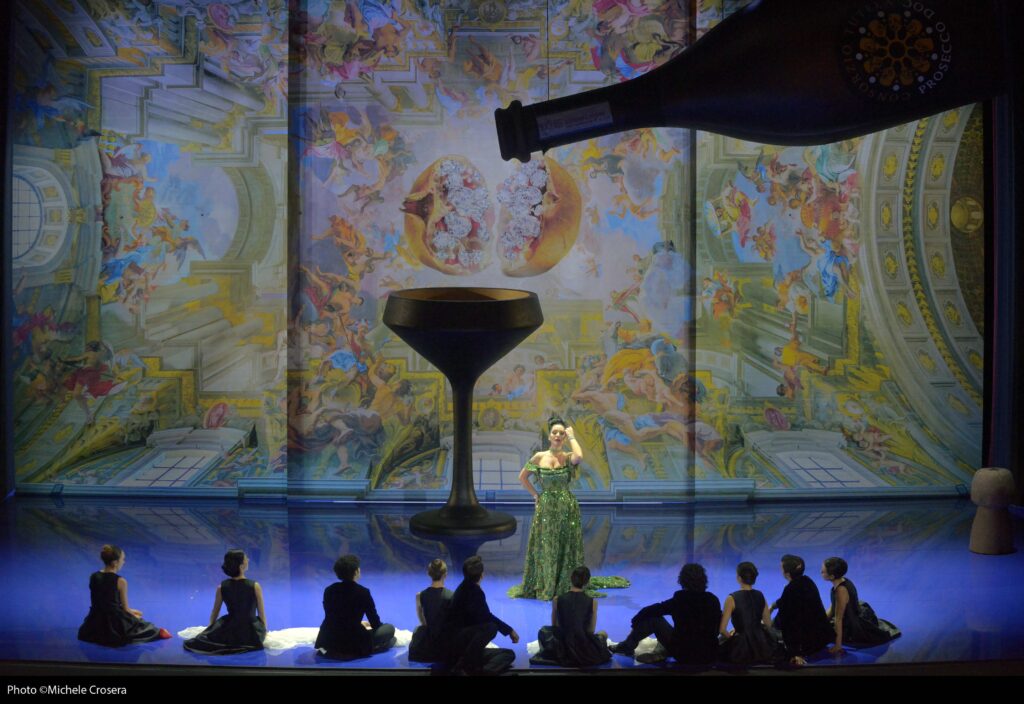
- Photo ©Michele Crosera
The boards of the stage and the twisted curves of the vines share the same essence. Regardless of whether we are talking about melodic operas, comedies or tragedies, what unites theatrical performance and Prosecco DOC is the very concept of artistic creation. And of shrewd, intelligent interpretation of reality: theatre allows us to embody something we are not, to discover parts of ourselves that would otherwise be forgotten or unexplored, to bring out the distinguishing features of who we do not want to (or cannot) be. A long introspective journey inside ourselves, that becomes a public story, a (re)creative catharsis. As is the case with Prosecco DOC, the final goal is to achieve the highest standard, compliant with the production regulations, pursuing your own individual approach in the cellar. Winegrowers as the directors of a collective production, in which the actors promise to uphold their reputation for individuality and unpredictability, while allowing themselves to be directed so that the final performance, on stage and in the bottle, is of the finest possible quality. The same thing happens with the Italian Genius of what foreign consumers consider the most recognisable, identifying and tantalising Italian wine, with an unveiling of the innermost self, sip after sip, gradually setting all inhibitions aside. Freeing a voice that sounds so intimate and unusual that we sometimes struggle to recognise it as our own. Like a gentle song that echoes from the vineyards, and an unexpected offstage declamation.

50 TOP ITALY, international cultural project whose aim is to share a map of the Italian restaurants all over the world, has started a Made in Italy enhancement project in the US in collaboration with the Consorzio di Tutela della DOC Prosecco.
“A Taste of Italy in Manhattan” aims to present some of the protagonists of Italian restaurants in the Big Apple, pairing their signature dishes with a glass of the most exported and consumed Italian sparkling wine, Prosecco DOC.
A format of 5 videos, with 5 chefs and 5 Prosecco DOC labels.
In collaboration with AICNY (Associazione Italiana Chef New York).
Pizza by Roberto Caporuscio, Kestè (New York) – Bottega Prosecco DOC Brut “Gold”
Pizza by Pasquale Cozzolino, Ribalta (New York) – Villa Sandi Prosecco DOC Treviso Brut “Il Fresco”
Risotto al Radicchio by Riccardo Orfino, Alice (Manhattan) – Mionetto Prosecco DOC Treviso Brut
Mameli Cake by Mario Santoro, Cardinali Bakery (Long Island) – La Marca Prosecco DOC Extra Dry
Risotto al Prosecco by Raffaele Solinas, Osteria Brooklyn (Brooklyn)

Let’s start with what may seem obvious to many, but sometimes we need to be reiterated: in the world – and especially in Italy – fine dining is a sort of “great ambassador” of our local wines and plays a fundamental role in their enhancement. In this regard, fine dining is an ace in the hole for transforming the perception of bubbles from “party wine” to “wine for the whole meal”.
Another obvious consideration: who better than fine dining itself can talk about fine dining?
Specifically, who better than the maîtres, the sommeliers, the managers or owners of the restaurants can narrate intangible yet essential aspects such as attention, hospitality, care, which – together with the cuisine – make the customer experience unique?
With the aim of valuing the relationship between Prosecco DOC and fine dining, we have created a real narrative path aimed at enhancing wine in the storytelling of the stars of fine dining: starting with Sara Squarzoni, owner with husband Federico Chignola of La Casa degli Spiriti in Costermano sul Garda, in the province of Verona, a “balcony on the lake” where you can enjoy dishes that combine colors and local flavors wisely combined with Prosecco DOC.
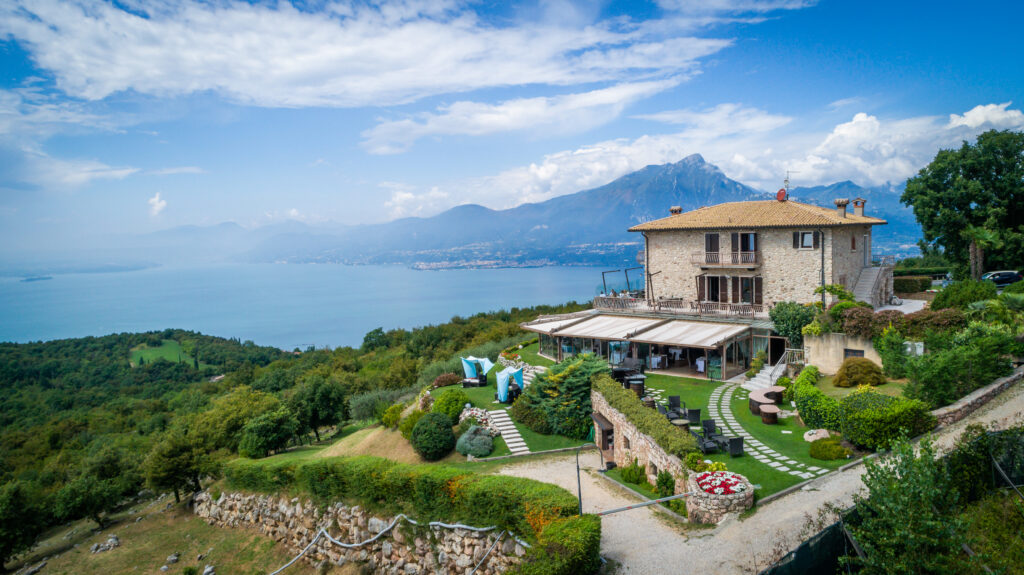
Going on with GP Cremonini, patron of the Venetian Riviera Ristorante per onnivori, born thanks to his infinite love for the city: here Cremonini welcomes Venetians and guests from all over the world, joyfully and warmly serving local products, such as cuttlefish from the lagoon, accompanied by the authentic Prosecco DOC.
Then there is Bonny Ferrara, who with the chef Francesco Sodano manages Il Faro di Capo d’Orso in Maiori, in the splendid setting of the Amalfi Coast: the dish that represents their new Italian cuisine is the cooked leek under ashes, characterized by an intense taste that goes perfectly with the Prosecco DOC bubbles.
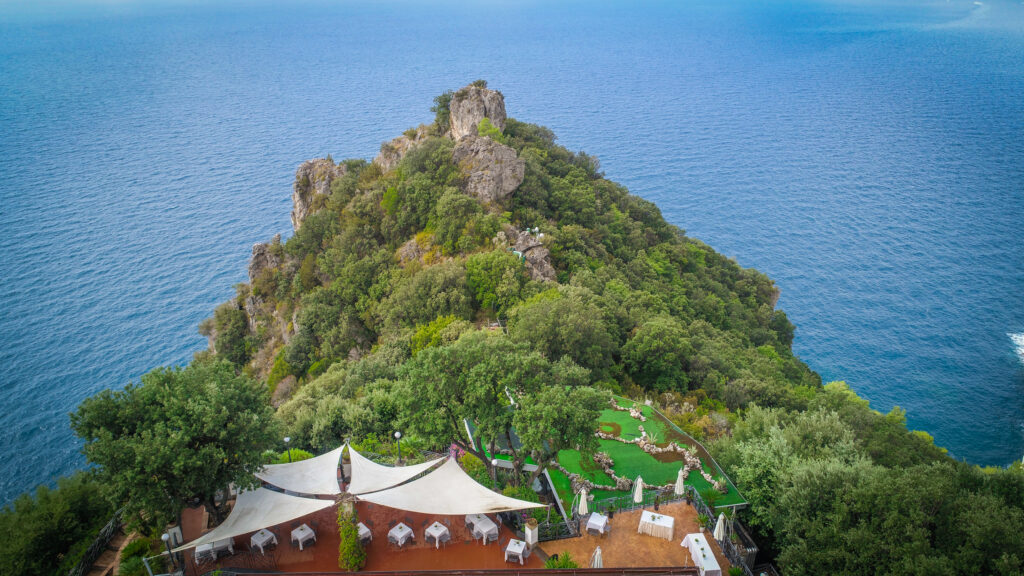
We then return north with Ludovica Rubbini, from Sanbrite, in Cortina d’Ampezzo, a restaurant of excellence that has recently won its first Michelin star. As soon as crossing the threshold of Sanbrite, it’s impossible not to breathe the authenticity of the territory, the love for genuine Km0 ingredients, the hospitality and perceiving the soul of Prosecco DOC. The spaghetti with mountain pine combined with bubbles thus become the most refined expression of this enchanting treasure chest in the heart of the Dolomites, as well as the Chef Riccardo and his wife and Director of Sala Ludovica know-how.
Finally, Prosecco DOC flies from Quisisana, a top-level hotel in the heart of Capri, overlooking the crystalline sea of the island of Campania, which has become a benchmark for international tourism. Aldo D’Errico, maître for 25 years now, says that Quisisana’s favorite bubble is the one of the Italian Genius, perfect for an aperitif on the terrace and for pairing with Mediterranean fish. And we, on the other hand, think that it couldn’t be really otherwise.
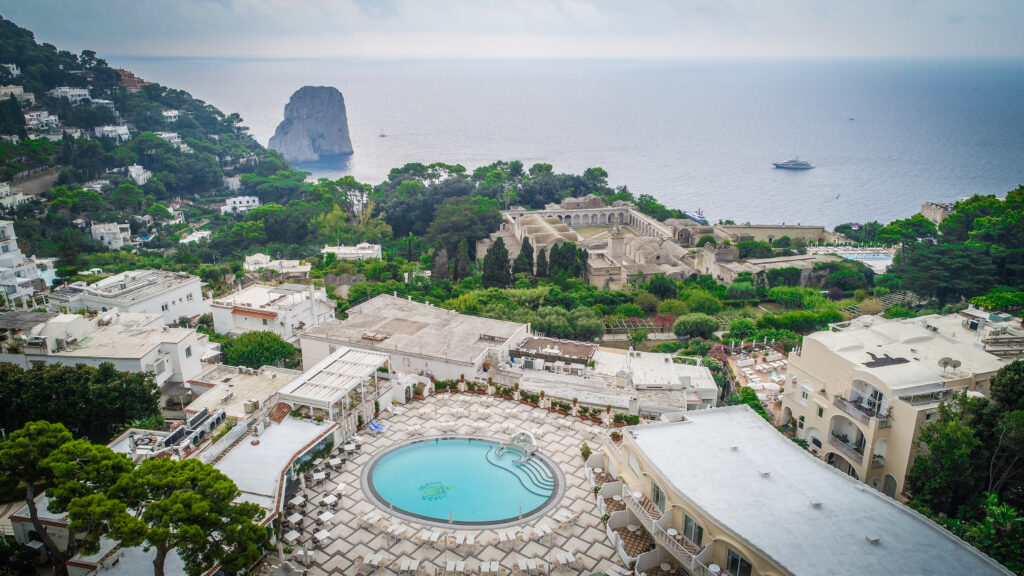

The golden and sparkling thread of Prosecco DOC can unite distant places. And it is the fresh, immediate, and aromatic trait d’union to bring together in a universe of ?lavor ?ive types of pizzas, ?ive ways of understanding the leavened disc of dough that can make you happy at all latitudes of the world, ?ive interpretations that are united by the idea of a gourmet pizza. But not in the snobbish sense of the term, but to underline the research, the peculiarity, the people who made them.
Involuntary founder Renato Bosco in San Martino Buonalbergo (Verona) began with Saporé , which later became Renato Bosco Pizzeria, and was able to build his wonderful empire on the evolution of pizza. “I always start with tradition, because without tradition there is no innovation,” he says, and it’s hard to argue with him. Prosecco is a quintessential example of how robust tradition has been polished to a perpetual and common elegance, similar to the continuous and deep research on pizza: together they represent the most authentic, genuine, and brilliant Italian excellence.
“Gourmet pizza means that a restaurant has put pizza at the center of the culinary experience,” stresses Davide Iannacco of Taverna Gourmet, in Milan, who is keen to highlight how the recipes are a fundamental part of his idea of pizza. The topping garnishes and enhances the richness of the research on the pizza bases, cooked in a wood-ired oven, and that Prosecco DOC comes to accompany with sweetness and freshness.
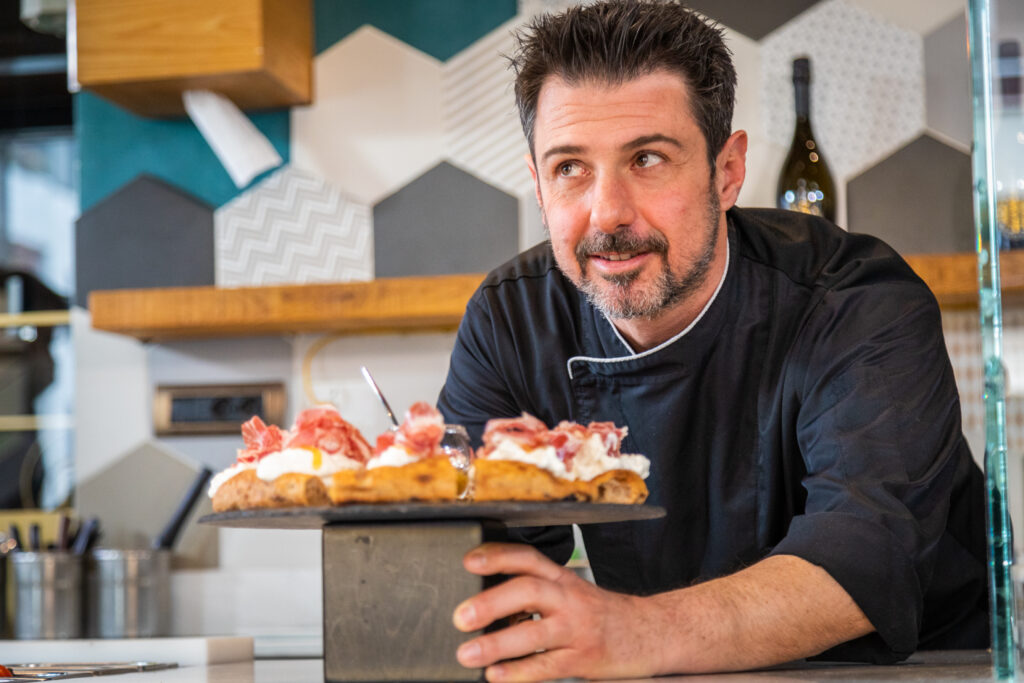
The bubbles also accompany the gourmet pizza from Battil’oro, with smoked burrata, Cantabrian anchovies, pink pepper, basil and extra virgin olive oil by the explorer Gennaro Battiloro, who arrived like a modern Vasco da Gama after experiences abroad on the coast of Forte dei Marmi (“to emphasize the importance of raw materials: land, wheat, sun, everything you need to create an excellent dough and fill it with carefully selected ingredients”).
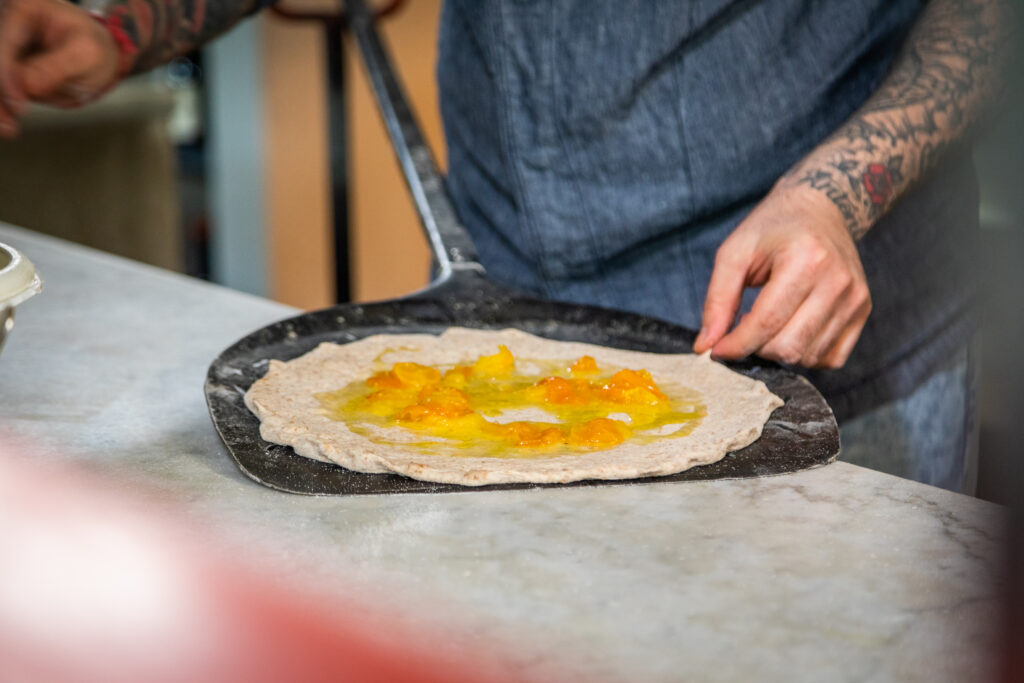
And there is always Prosecco DOC to support the crazy happy idea of Aurora Mazzucchelli of Mollica, in Sasso Marconi (Bologna), who as a star chef has chosen to invest in leavened products giving pizza a very personal twist: a dough based on the Roman pala (with roasted cauliflower cream, butter-glazed and golden sweetbreads, and a Bernese sauce) or a toasted barley focaccia-bread stuffed with delicacies, an invitation to the “nice” glass of Prosecco DOC that follows the tasting with fruity notes. All pizza chefs know that the best bubbles of Prosecco will be able to find their aromatic-tasting way into exalting pizzas.
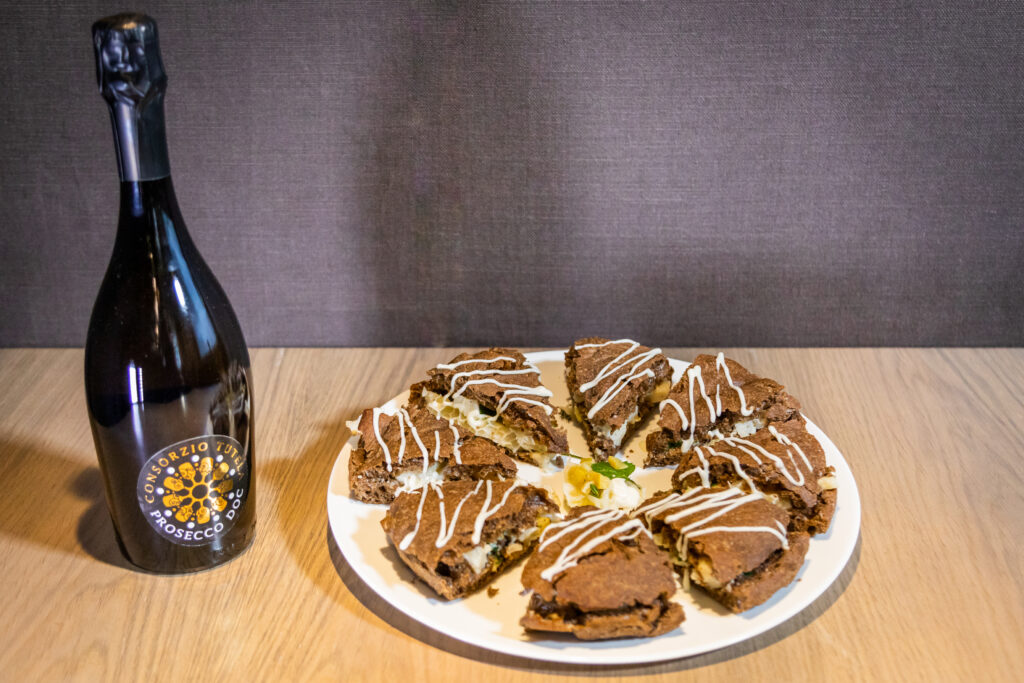
The new millennium is an instigator of innovation, confirms Michele Colpo from Premiata Fabbrica Pizza in Bassano del Grappa, he points out to Renato Bosco among the masters of white art and pushes the acidity of leavened pizzas towards very pleasant heights with his own interpretation. Not forgetting to emphasize that: “Pizza should always be tasted with a Prosecco DOC. The bubbles accompany you along with the pizzas”.